Lobster in Cornwall

I had just sat down for dinner on my third and final night in Cornwall. There were six lobsters on a chopping board in the centre of the table. Their red shells looked hot to touch, and I frowned slightly, knowing that not too long ago, they had been happy little blue molluscs, swimming about the shallow sea, scuttling unknowingly into a fatal crab pot.
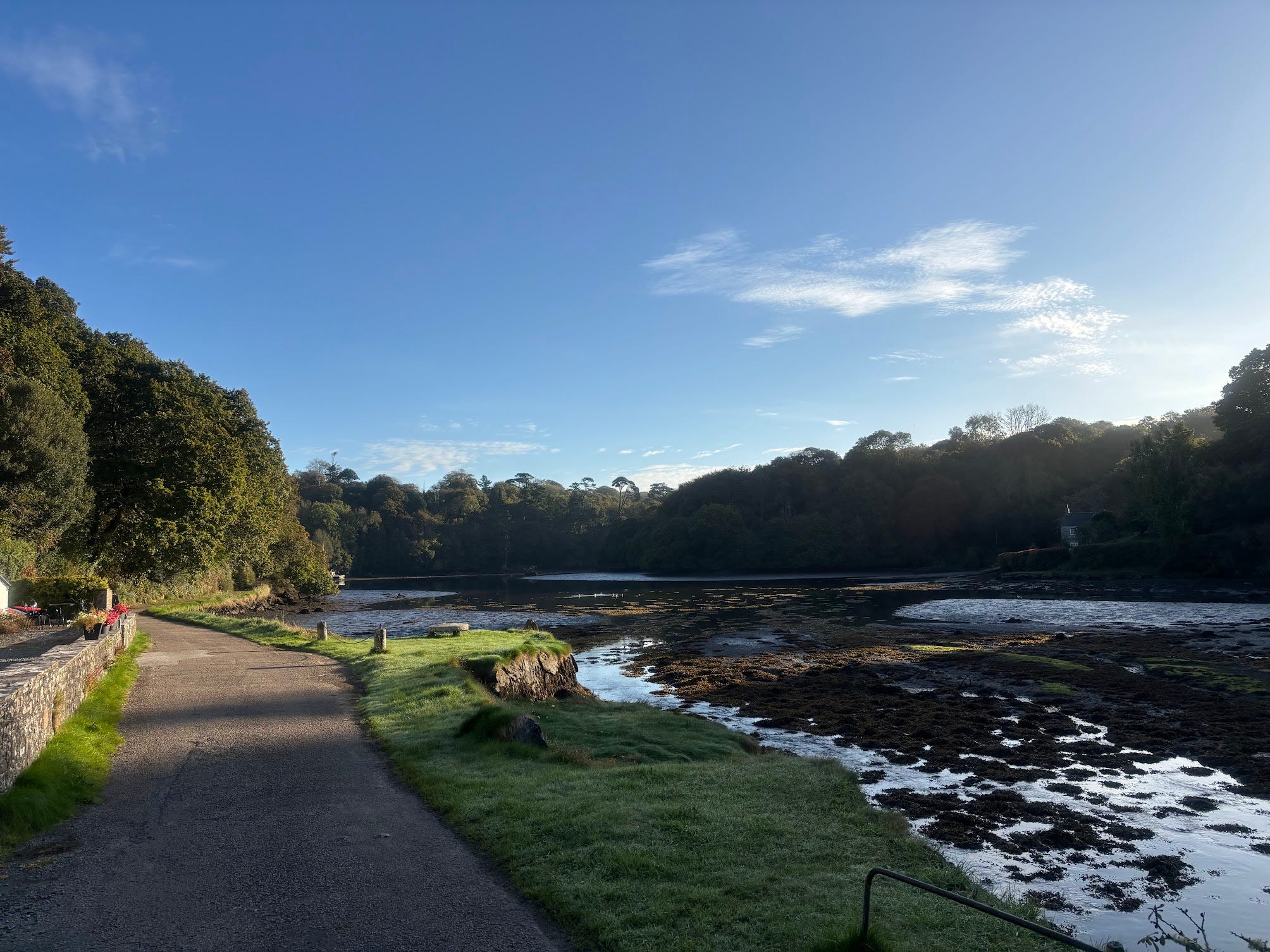
I was staying in a remote cottage in a hamlet on the south coast of Cornwall. It’s a very inaccessible part of a county that already sits at the end of the earth. The only way to get to this part of the country is to go by car. Theoretically, you could also walk, cycle, or sail over, but the former two options are dangerous and time-consuming, and the latter requires a high level of skill and a familiarity with the hidden rocks that are only visible at low tide. There are no buses or trains, and the farmers are unlikely to offer you a lift on the back of their tractor.
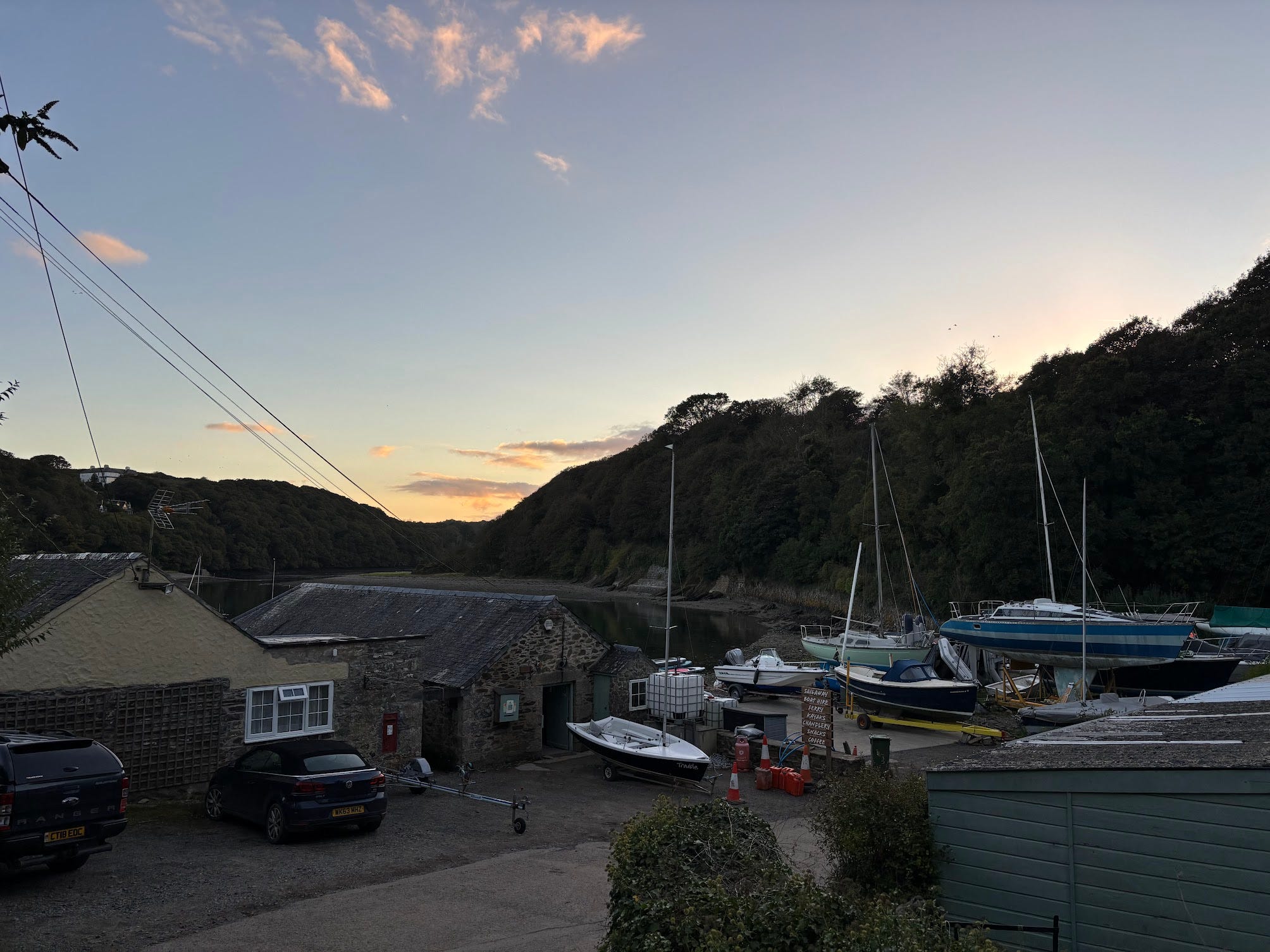
On that evening, it was chilly, and the sun had long since set past the wooded hill on the other side of the valley. There were six of us around the table in the conservatory: two young naval officers, two people I knew from Oxford, and Pete - our host. From my seat, I had a view of the garden. I was sleeping in a tent that night, and I could just spot the canvas top, sticking out from behind a bush. A bright moon was illuminating the wide lawn. In the daytime, it is a garden full of flowers that resounds with birdsong and the hum of pollination. It is bordered by a short fence - more to mark the boundaries of the garden than to keep anyone out. If you walk over to it, you get a view of the quiet cove below and beyond into the creek. There are several dinghies and flat-bottom boats anchored in the shallow water. There are a few buildings where you can hire paddleboards and canoes, and beside them, there are larger yachts on trailers - their great hulls suspended a few feet above the ground. During the day, tractors drive up from behind the cottage down to the boats, moving them out to the water. Men in blue overalls fix the riggings, repair engines, and zoom about on little speed boats. Their accents are thick with Cornish intonation, their faces are etched with Celtic features. These people are the ancestors of those who sailed over from Brittany to escape the invasion of Julius Caesar. It’s a harbour of sorts during the day and then, when evening comes, everything is silent. In my tent, I can hear the wind passing through the trees and bushes as well as the occasional moo of a cow from the farm up the road.
The water is almost always glassy and clear. It’s a very spiritual place to swim - equal in my opinion to Kootenay Lake, in Nelson, Canada. There is a gentle current that wafts you out to sea, schools of bass, and seaweed that has blue bioluminescence as the current buffets it underwater.
On the other side of the cove, there are a few houses, the majority of which were built within the last twenty years. They have white walls and large windows opening up to the eastern sky. The light reflects onto the water in the evening, illuminating part of the black space between the ships. This part of Cornwall, once only home to local fishermen, has begun to be invaded by rich Londoners. They build hillside houses with sea-views, defying planning permission refusals by challenging the local council with legal battles they can’t afford to fight.
Back at the table, we were having lobster for starters, and there was roast pork in the oven for the main course. We each had a chopping board, a sharp knife, and a special, thin fork to pull out the hidden meat that lay inside the lobster claws. I looked down at the large animal on my wooden board - its shell was a sunburnt red and its pincers were still sharp. I hesitantly touched them and jerked my finger back, expecting them to snap shut. Luckily, Peter - the chef for the evening - was well versed in catching, freezing, boiling and then eating lobster. In this part of the Cornish coast, not too distant from the Lizard peninsula, he had around 10 crab pots, lurking in the water, rigged with bait. Every summer, he’d go out to sea daily in his boat Merry Maid and delicately pull each of them out. It was rare to go a day without some crab or lobster being caught. If they were empty, he’d get out his line and catch a few mackerel for dinner. Now and then, a dogfish would be stuck in one of the pots. Peter would take it out with a firm grip and pose for a photo before throwing it back into the sea. You have to be careful holding these dogfish because their whole body is made up of muscle, and more than half of their skin is razor sharp. Lobsters are the easiest to deal with. Once caught, you place them in a pot or bucket and then in the freezer.
I looked down at mine on the chopping board. It was definitely brown-bread. It had once been purple-blue in colour, as all lobsters are. They only turn red after being cooked for a while in boiling water. I stroked its back, frowning slightly. Whenever I go on the boat, I always beg for part of the catch to be spared and released back into the water. Forgive me little friend, I whispered, as I picked it up and looked into its dead eyes. It struck me that it was, in a sense, a hybrid creature - possessing an insect front and a more fishy tail-like behind.
I looked over at Peter, the head of the group. He’s a tall man in his 70s, and at that moment, he was using a wooden rolling pin to break an unusually resistant lobster claw. Only a few years ago, he had retired from being a high-ranking civil servant. Before then, he had been a naval officer. He had a rich, musical voice that climbed and descended the scales as he spoke. He had studied at Merton College, Oxford, and regularly reminded us that his college was far older than ours - and therefore a lot more serious. Peter had been a scholar at Merton and had the rare privilege of having had a term’s teaching, one on one, with none other than J.R.R. Tolkien. I had met him (Peter, not Tolkien) at an Oxford dinner in 2019 through a mutual friend. I had been on fine form that evening, with my head lightly spinning from enjoying the open bar. Bold with my banter, Peter and I had hit it off. After a few follow-up meet-ups, he had invited my friend and me to spend a few days down in Cornwall. Every year, he told us, he rented the same cottage on the coast and hosted friends there for the summer. There would be fishing, delicious seafood dinners, and lots of interesting people to meet.
This indeed turned out to be the case, and I drove down to the cottage on many of the following summers, alone or with friends and girlfriends. There’s something about the wild, Celtic feel to the Cornish coast. It feels like you’re entering another land as you cross the River Tamar and leave Devon, knowing full well that the dual carriage-way is about to become an inhospitable single-track road, winding its way through forests of ancient oaks, crossing medieval, fairy-tale bridges, and ending up at the sea, on the frontier of Albion, where you can look onward to France and dream of other continents far, far away.